Food Safety Tips for Children With Low Immunity During Chemotherapy
For a child going through chemotherapy, a meal is far more than comfort. It is fuel for healing, strength for the next cycle and, often, one of the few things that still feels normal. But chemotherapy also weakens the body's defences, which means the same food that nourishes a child can make them seriously ill if it is not handled safely.
At Cuddles Foundation, we work every day with children fighting cancer and the families who care for them. Our paediatric oncology nutritionists see how much good food matters, and how much careful food handling matters too. This guide brings together simple, practical food safety tips that parents and caregivers can follow at home, in hospital and on the go.
The goal is not to make eating stressful. It is to help your child eat well, eat safely and keep their treatment on track.
Why Children on Chemotherapy Are More Vulnerable to Foodborne Illness
Chemotherapy targets fast-growing cells. Cancer cells are among them, but so are the white blood cells that fight infection. When a type of white blood cell called neutrophils drops too low, doctors call it neutropenia. During these periods, even germs that a healthy child would shake off can cause serious illness.
Food can carry bacteria such as Salmonella, Listeria and E. coli. In children with weakened immunity, these infections can spread quickly and may lead to hospital admission, treatment delays or dangerous complications. Chemotherapy can also cause mouth sores and damage to the gut lining (mucositis), giving germs an easier way into the body.
The Food Safety for People with Cancer booklet from the USDA and FDA lists cancer patients among the groups most at risk of serious foodborne illness. That is why safe food handling is not optional during treatment. It is part of the treatment plan.
There is a second reason food safety matters. Good nutrition helps children tolerate treatment better, and a bout of food poisoning can undo weeks of careful eating through vomiting, diarrhoea and dehydration.
Neutropenic Diet vs Food Safety: What the Research Says
For many years, children with low blood counts were put on a strict "neutropenic diet" that banned most fresh fruits and vegetables. The idea was to reduce exposure to bacteria. The evidence, however, has moved on.
A randomised trial of 150 children on chemotherapy found that the neutropenic diet gave no added protection against infection compared with standard food safety guidelines, and it was harder for families to follow. In 2025, an international panel published a clinical practice guideline on food restrictions in children with cancer that advised against routine food restrictions during chemotherapy, while stressing that families should follow good food safety practices.
What does this mean for parents? Your child does not necessarily need to give up fresh, nourishing foods. Instead, the focus shifts to how food is chosen, washed, cooked and stored. A diet that is too restrictive can also make it harder for a child to eat enough, which is a real risk when many children with cancer in India are already malnourished at diagnosis.
Always follow the specific advice of your child's oncologist and nutritionist. Some situations, such as a bone marrow transplant or very low counts, may call for extra precautions.
4 Core Food Safety Tips for Parents at Home
Most food safety advice comes down to four simple habits: clean, separate, cook and chill.
1. Clean: Hands, Surfaces and Produce
Wash your hands and your child's hands with soap and water for at least 20 seconds before eating, before cooking and after using the toilet.
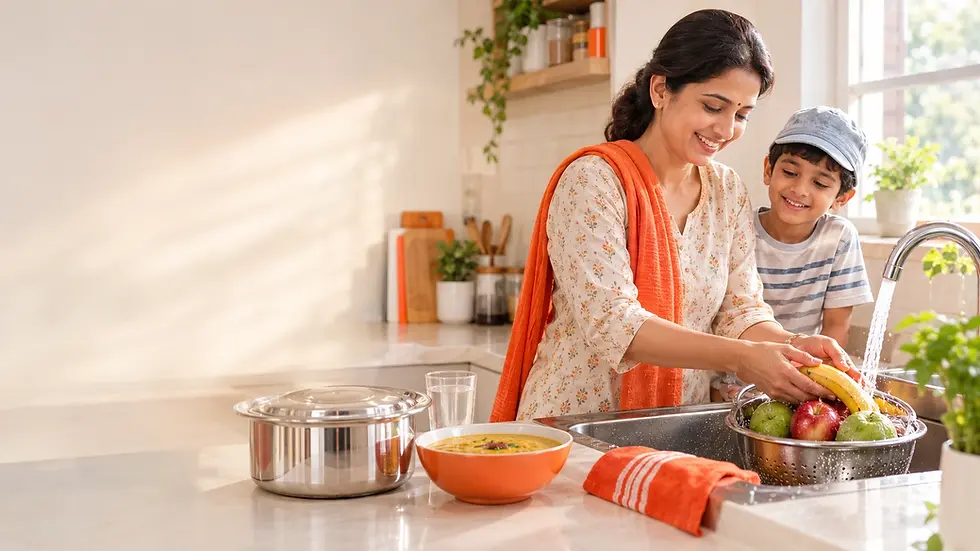
Wash fruits and vegetables under clean running water, even those you will peel, such as bananas, oranges and papaya. Peeling a dirty fruit can carry germs onto the part your child eats.
Scrub firm produce like cucumbers, carrots and potatoes with a clean brush.
Wash cutting boards, knives, plates and kitchen cloths with hot soapy water after every use. Change or wash kitchen towels daily.
2. Separate: Keep Raw and Cooked Apart
Use separate chopping boards for raw meat, fish and eggs, and for fruits, vegetables and cooked food.
Store raw meat and fish on the lowest shelf of the fridge in a closed container so juices cannot drip onto other food.
Never put cooked food back on a plate that held raw meat or fish.
3. Cook: Heat Food All the Way Through
Cook chicken, fish, meat and eggs until fully done. Chicken should have no pink inside and the juices should run clear.
Cook eggs until both the white and the yolk are firm. Avoid half-fried or soft-boiled eggs.
Bring dals, gravies and soups to a full rolling boil before serving.
Reheat leftovers until they are steaming hot all the way through, and reheat only once.
If you have a food thermometer, aim for at least 74°C in the thickest part of chicken and when reheating leftovers.
4. Chill: Store Food at the Right Temperature
Refrigerate cooked food within 2 hours of cooking, or within 1 hour on very hot days.
Keep your fridge at 4°C or below.
Eat refrigerated leftovers within 24 hours where possible. When in doubt, throw it out.
Thaw frozen food in the fridge or microwave, never on the kitchen counter.
Foods to Avoid or Handle With Extra Care
Some foods carry a higher risk of contamination. Talk to your child's care team about which of these apply during each phase of treatment.
Food | Why it is risky | Safer choice |
Raw or unpasteurised milk | Can carry Listeria, E. coli and other bacteria | Boiled milk or sealed pasteurised packets |
Raw or undercooked eggs | Risk of Salmonella | Eggs cooked until white and yolk are firm |
Undercooked chicken, meat or fish | Bacteria survive in the centre | Fully cooked, steaming hot meat and fish |
Raw sprouts | Seeds can hold bacteria that washing cannot remove | Sprouts cooked well in a curry or stir-fry |
Unwashed or cut fruit sold outside | Unknown water and handling | Whole fruit washed and cut at home |
Street food, pani puri, chaat, cut salads | Uncertain water, hygiene and storage | Freshly cooked home food |
Soft cheese, paneer of unknown source | Can carry Listeria if unpasteurised or poorly stored | Fresh paneer from a trusted source, cooked before eating |
Leftovers kept out for hours | Bacteria multiply at room temperature | Food refrigerated within 2 hours and reheated well |
Unboiled or untreated water | Waterborne germs | Boiled and cooled water or a reliable purifier |
Damaged, bulging or expired packets and cans | Possible contamination | Intact, in-date packaged food |
If you are unsure about a food, ask the nutritionist at your child's hospital before offering it.
Food Safety Tips for Indian Kitchens
Many families we support cook in small kitchens, share water sources or travel long distances to reach a cancer hospital. These tips are built for those everyday realities.
Boil drinking water. Boil water for at least one minute, let it cool in a covered, clean vessel and use it for drinking and for making juices, buttermilk or ORS.
Boil milk every time. Even packet milk is safest boiled before use for a child on chemotherapy.
Make curd at home. Home-set curd from boiled milk is a safer choice than loose curd bought outside. Check with your nutritionist about probiotic foods during very low counts.
Cook fresh, cook small. Cook in smaller batches so food is eaten fresh rather than stored for long.
Be careful with chutneys and raw garnishes. Fresh coriander, mint chutney and raw onion are often added without cooking. Wash them very well, or skip them on days when counts are low.
Cover food at all times. Keep cooked food covered to protect it from flies and dust.
Store dry rations safely. Keep dal, rice, atta and sooji in clean, airtight containers away from moisture and pests. Discard anything with fungus or insects.
Wash fruits before cutting. Fruits like bananas, apples, guava and papaya are excellent for children with cancer when washed well and cut at home with a clean knife.
Looking for nourishing recipe ideas? Explore our tips on including good fats in your child's diet and these winter foods that help keep your child safe and healthy.
Food Safety in Hospital, While Travelling and Eating Out
Treatment often means long hospital stays, day-care visits and journeys between home and hospital. A little planning keeps food safe through all of it.
In hospital
Clean your hands and your child's hands before every meal, even if they have been sitting in bed.
Do not keep home-cooked food at the bedside for hours. Eat it soon after it arrives, and discard what is left.
Ask the ward staff or hospital nutritionist where food can be stored and reheated safely.
While travelling
Carry food that keeps well, such as roasted chana, khakhra, biscuits in sealed packets, whole fruits and boiled water in a clean bottle.
Avoid carrying cooked rice, curd or gravies for long journeys without a way to keep them cold.
Carry hand sanitiser for times when soap and water are not available.
Eating out
Choose freshly cooked, piping hot dishes over buffets, salads and food that has been sitting out.
Avoid raw garnishes, chutneys, ice and fresh juices from roadside stalls.
Pack leftovers only if you can refrigerate them within 2 hours.
Warning Signs to Report to Your Child's Care Team
In a child with low immunity, an infection can become serious quickly. Contact your child's oncology team or go to the hospital right away if you notice:
Fever, chills or shivering, even if mild
Vomiting or diarrhoea that does not settle
Stomach cramps or pain
Signs of dehydration, such as very little urine, a dry mouth or unusual sleepiness
Blood in stools or vomit
Refusing to eat or drink
Fever during chemotherapy is treated as an emergency in most cancer hospitals. Do not wait to see if it passes, and do not give fever medicine before speaking to the team, as it can mask important signs.
How Cuddles Foundation Supports Safe, Nourishing Food for Children With Cancer
Many families struggle to afford nutritious food while managing the cost of cancer treatment. Cuddles Foundation steps in so that no child has to fight cancer on an empty stomach.
Paediatric oncology nutritionists: We place trained nutritionists in partner government and charity cancer hospitals. They counsel families on what to feed, how much, and how to prepare food safely during each stage of treatment.
Food aid: We provide hot meals, in-meals, nutritional supplements, eggs, bananas and monthly ration bundles for families.
Evidence and research: Through our FoodHeals™ Report and research work, we study the nutritional side of childhood cancer in India.
You can see the difference this makes on our impact page, and read stories of children and families on The Orange, our blog.
Frequently Asked Questions
Can my child eat fresh fruits during chemotherapy?
In most cases, yes. Current research shows that well-washed fresh fruits do not raise infection risk compared with strict restricted diets. Wash fruits under clean running water and cut them at home. Follow your oncologist's advice if your child has very low counts or has had a transplant.
Is a neutropenic diet necessary for children with cancer?
Recent evidence, including a 2025 international guideline, does not support routine food restrictions for children on chemotherapy. Safe food handling is what matters most. Your child's care team may still advise extra steps in specific situations.
Is homemade food safer than packaged food?
Freshly cooked homemade food prepared hygienically is usually the safest choice. Sealed, in-date packaged foods can also be safe. Avoid food that has been left out, reheated many times or bought from stalls with uncertain hygiene.
How long can I store cooked food for my child?
Refrigerate cooked food within 2 hours and try to use it within 24 hours. Reheat until steaming hot, and reheat only once.
Can my child eat curd or paneer during chemotherapy?
Curd set at home from boiled milk and fresh paneer from a trusted source, cooked before eating, are generally considered safe. Check with your child's nutritionist during periods of very low immunity.
What should I do if my child gets a fever after eating?
Contact your child's oncology team or go to the hospital immediately. Fever during chemotherapy can signal a serious infection and needs urgent medical attention.
Conclusion
Food safety during chemotherapy is about small, steady habits: clean hands, washed produce, food cooked through and leftovers stored cold. These habits protect children with low immunity without taking away the fresh, nourishing foods their bodies need to heal.
At Cuddles Foundation, we believe that #FoodHeals. Every safe, wholesome meal helps a child stay strong enough to complete treatment. You can help more children get that chance by donating to Cuddles Foundation or finding other ways to get involved.
This article is for general information only. Always follow the advice of your child's oncologist and nutritionist.
Comments